Written by: Aaliyah Lo-A-Njoe | ⏱️Estimated reading time: 15 minutes
Hey Marketing Mavericks,
You've invested years in perfecting your SEO strategy. You've analyzed keywords, built backlinks, and optimized your content until you dropped. And now? A new acronym suddenly appears that turns everything upside down.
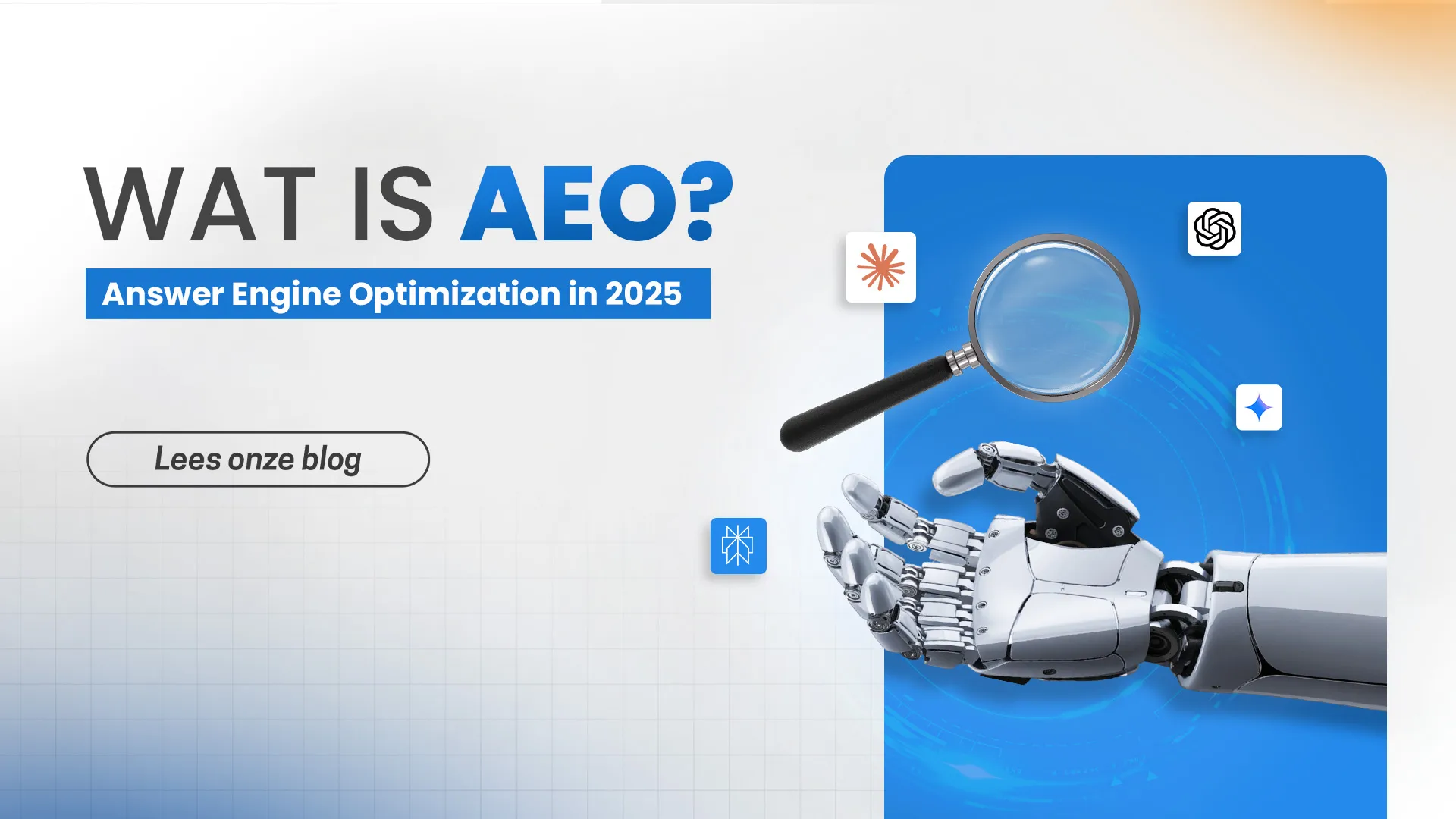
Welcome to the world of Answer Engine Optimization!
I know. Another optimization strategy to wrap your head around. But before you sigh and think, "This will pass," I have to tell you something: AEO isn't just a fleeting trend. This is the future of how people find information. And that future? It's already here.
The shift you can't miss
Remember the days of typing a question into Google and happily scrolling through pages of search results? Yeah, those days are over. These days, people get their answers instantly—without a single click.
Think about it. When was the last time you used ChatGPT, Perplexity, or Google's AI Overviews to quickly find an answer? Exactly. And you're not alone. 34% of US adults now use ChatGPT regularly, a doubling since 2023. We're talking about a fundamental shift in search behavior.
The numbers don't lie: when Google's AI Overviews appear, the click-through rate for the top organic result drops by a whopping 34,5%. That's not noise in the data. It's a seismic shift.
Okay, but what exactly IS AEO?
Answer Engine Optimization is the art (and yes, also the science) of optimizing your content so that AI-powered platforms like ChatGPT, Google's AI Overviews, Perplexity, and voice assistants can understand, summarize, and cite your content as the perfect answer to a user's query.
The difference with traditional SEO? With SEO, you want to be on page one. With AEO, you want to be the answer itself. You don't optimize for rankings, but for visibility in AI-generated summaries and direct answers.
And let me be clear: this does not mean that SEO is dead. On the contrary. SEO and AEO are more like cousins who complement each other at a family gathering. They share the same DNA, but each has their own superpowers.
SEO vs AEO: The Key Differences
Let's get concrete. Here are the game-changers you should be aware of:
The endgame is different
SEO is all about rankings and clicks. You want to be in position 1, and you measure success through organic traffic. AEO? They play a different game. The goal is to be cited in AI answers, even if users don't click through to your site. Pretty crazy, right?
The optimization signals differ
With SEO, you focus on keywords, backlinks, and domain authority. AEO requires a different mindset. It's all about context, structured data, factual accuracy, and what Google so aptly calls EEAT: Experience, Expertise, Authority, Trust.
User behavior has a plot twist
With traditional SEO, you expect people to click through to your website. With AEO? Not always. Stack Overflow saw an 18% drop in visits after ChatGPT became popular, because developers were getting their code answers directly from AI. But here's the twist:
It's not just about traffic anymore. It's about brand visibility, authority, and being the answer when it really matters.

Why implementing AEO now is not an option
Let's be frank: if you ignore AEO, you're falling behind. And not just a little bit.
In January 2025, AI Overviews appeared in 6,49% of searches. By March, that had doubled to 13,14%. This rate of adoption is unusual. This is exponential growth.
And your target audience? They've already switched. According to WebFX, more than 60% of Millennials and Gen Zers are already using AI engines in their search routines. That's not a niche audience of early adopters. That's mainstream.
For agencies and marketing specialists, this means one thing: your competitors are already on their way. The brands that get their AEO game right now will claim the positions that AI systems will consistently cite. And the longer you wait, the more expensive and difficult it will be to gain that ground.
The four pillars of AEO
Ready to make your content AI-ready? Focus on these fundamentals:
- Structured data is your best friend
Schema markup, FAQs, data tables—anything that makes your content machine-readable. Pages with schema markup had a 58% higher visibility in AI snippets in 2025 compared to pages without schema.
- Write like people talk
Voice search has exploded. People aren't typing "best CRM software 2025"—they're asking, "What's the best CRM software for a small business?" Optimize for natural language queries. Think about the questions your customers are asking, not the keywords you found in a tool.
- Be the answer, not the link
Direct, concise answers win. AI engines love content that's to the point. Start your article with a clear definition or answer. Use headings that are questions. Make it as easy as possible for AI to grasp and cite your content.
- Authority is everything
AI engines prioritize authoritative sources. This means expert content, strong backlinks, consistency in messaging, and up-to-date information. Most LLM citations occur within 2-3 days of publication and can represent up to 2% of all citations in a niche, but this quickly declines to just 0,5% within 1-2 months.
From theory to practice: Your AEO action plan

Enough theory. How do you begin?
Start with competitive intelligence
Do some research. Ask ChatGPT, Perplexity, and Google's AI Mode questions relevant to your niche. Who's being cited? Why? Which content formats work? This is invaluable for your strategy.
Optimize your existing content
You don't have to start from scratch. Take your best-performing content and give it an AEO upgrade:
- Add schema markup
- Restructure with clear FAQ sections
- Add direct, concise answers at the beginning of paragraphs
- Update old content with fresh data and citations
Create question-focused content
Don't think in keywords, think in questions. What are your customers asking for? What are their pain points? Create content that answers those questions precisely – clearly, directly, and with authority.
Focus on formatting
AI engines love structure. Use:
- Short paragraphs
- Bullet points and numbered lists
- Comparison tables
- Clear headings (preferably in question form)
- Bold text for key takeaways
Keep monitoring and iterating
AEO isn't a set-it-and-forget-it strategy. In an analysis of 80.000 prompts, citations varied significantly from month to month. Even if you're cited today, that's no guarantee for tomorrow. Track your mentions, test different approaches, and keep optimizing.
The reality check: challenges and opportunities

AEO isn't always easy. There are challenges.
You have to optimize for multiple platforms simultaneously—Google, ChatGPT, Perplexity, voice assistants—and each has its own quirks. There's little transparency in algorithms. And dedicated tracking tools are few and far between.
But here's the kicker: that's precisely why this is your opportunity. We're in the early adopter phase. The brands that invest the time in AEO now will position themselves as authorities before the space becomes oversaturated.
And if you're a marketing specialist or agency? Then this is your moment to shine. Your clients need this, whether they realize it or not. Be the one to guide them through this.
The future is now
Here's the thing: AEO isn't a pipe dream. It's not a trend we might be talking about in five years. This is happening right now, as you read this.
105,1 million adults will use Generative AI this year. These aren't early adopters anymore. This is a mass movement.
The question is not whether you should get started with AEO. The question is: are you ready to lead the way, or will you play catch-up?
In 2025, it's no longer about being on page one. It's about being the answer when someone asks a question. And with the right AEO strategy? You can be that answer.
Ready to take your AEO game to the next level? The future of search doesn't wait. And neither should you.
FAQ: Your burning AEO questions answered
What is the difference between SEO and AEO?
SEO optimizes for search engine rankings and clicks to your website. AEO optimizes for your content to be cited in AI-generated answers, even if users don't click through. SEO focuses on keywords and backlinks, while AEO focuses on context, structured data, and direct answers. Both strategies complement each other and share many fundamentals, but they have different ultimate goals.
Does AEO mean I no longer have to do SEO?
Absolutely not! AEO doesn't replace SEO—it complements it. Strong SEO often boosts your AEO performance, as AI engines value quality content and domain authority. The best strategy combines both: optimize for traditional search rankings and AI citations. Think of it as a one-two punch for maximum online visibility.
How long does it take to see results from AEO?
AEO typically delivers faster results than traditional SEO. Many brands see measurable improvements within 6-8 weeks of consistent optimization. Some case studies even show double the growth within two weeks. This is because AI engines can process new information faster than traditional search engines with their complex crawling and indexing processes. However, sustainable results require continuous effort.
Should I be worried that people will stop clicking through to my website?
It's a valid concern, but it's not the whole picture. Yes, zero-click searches are increasing, but successful brands prove that visibility in AI answers can still lead to conversions. Think brand recognition, building authority, and indirect conversion paths. Focus on brand visibility when it matters – that's where the real value lies.
Which content formats work best for AEO?
AI engines appreciate well-structured, scannable content. Focus on FAQ sections, how-to guides with step-by-step instructions, comparison tables, lists of pros and cons, and content that begins with direct, concise answers. Use schema markup, clear headings (preferably in the form of questions), short paragraphs, and bullet points. Natural language is crucial—write like humans speak, not like robots search.
GET MORE RESULTS FROM ONLINE MARKETING?
CONTACT US TODAY AND WE WILL HELP YOU GROW!